BACKGROUND
SAM makes it simpler, faster, and safer to respond to emergency calls no matter the type of area – or even a mix of urban and rural, dense, or distant. Boone County Fire Department in central Missouri serves one such area with a large population. Bordered by the Missouri River on the West side, a major interstate runs through the heart of the county. With a service area of about 490 square miles and a population of around 50,000, the BCFD covers 9 different municipalities. The Department is made up of 200 members, 20 of which are paid. The BCFD is known as one of the best training departments in the country, as 28 active fire chiefs throughout the country started their career by volunteering in Boone County. The department’s volunteer base is made of 18% females, quadrupling the national average of 4%. With a call volume of 4,500, the department responds to roughly 50 true structure fires per year.
CHALLENGE
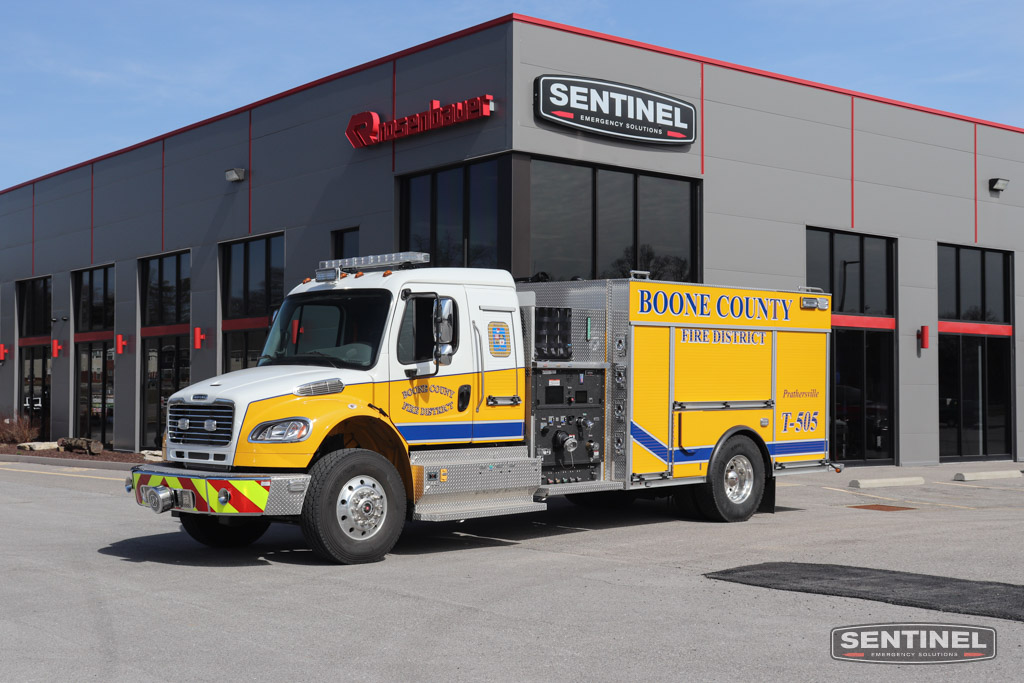
Boone County leaders take pride in being early and large-scale adopters of SAM. That’s in part because Boone County is near the birthplace of SAM, St. Louis, Missouri. In 2021, the Department ordered four tankers and five engines, all equipped with SAM. Assistant Chief Gale Blomenkamp describes the challenge the department was facing and how SAM helped address those issues by saying, “Knowing how SAM worked from the beginning and the ease with which it operates, knowing the turnover of our staff, knowing our team keeps getting younger, and knowing they may only run the pump 3-4 times per year, using SAM takes out the guesswork.”
“The ease of teaching SAM vs a traditional fire truck is hands down much easier.”
SOLUTION
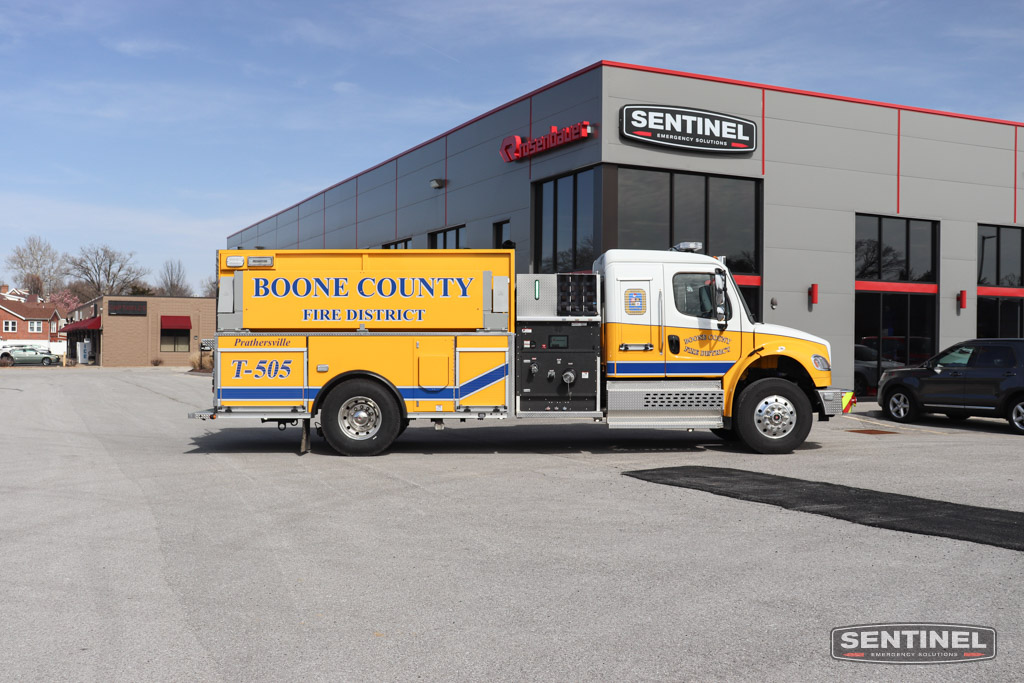
With a department that relies heavily on volunteers and faces high turnover due to recruitment outside the area, a simple, consistent, and effective solution like SAM significantly impacted the training and efficiency of the BCFD. Blomenkamp states, “If you have a firefighter at the fire station 10 days a month and running the engine, it is simple to learn it and do it well. But when you have so many volunteers, simplicity goes a long way. The ease of teaching SAM vs a traditional fire truck is hands down much easier.”
RESULTS
Our volunteers’ time is worthwhile, so we should maximize their time. We do pump training in three days on the traditional system. With SAM it is finished in 2 hours.”
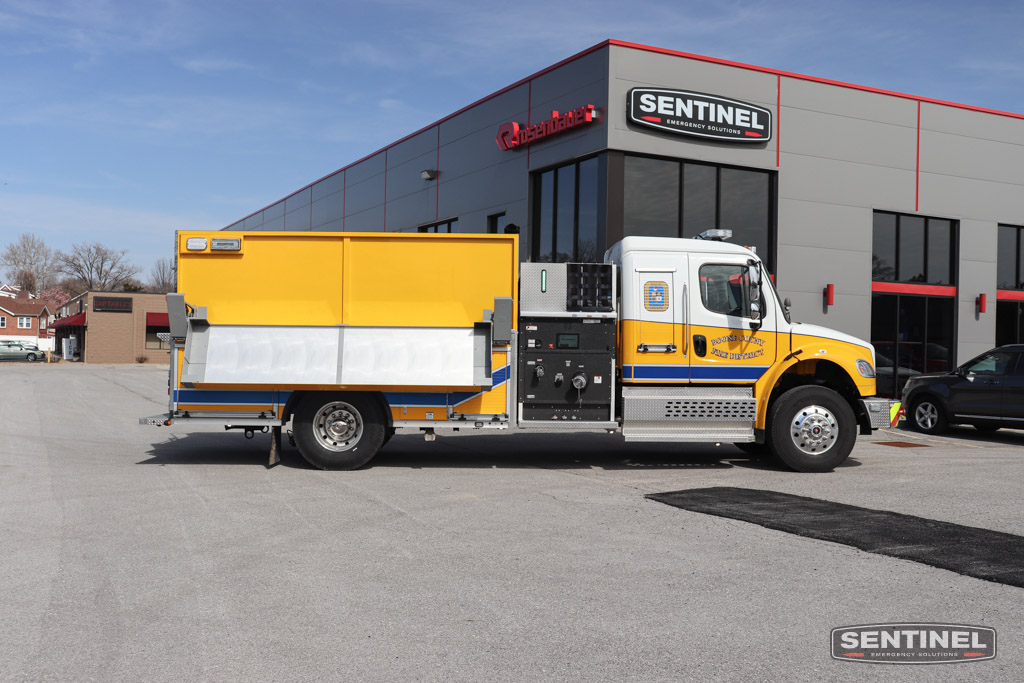
Asking about potential future trucks the department will invest in, Blomenkamp responded with a resounding argument in favor of only purchasing SAM-enabled trucks: “We should make everything as efficient as possible for our volunteers because they aren’t doing this every day. We should do everything in our power to make things calmer and quicker on the scene. SAM makes everything a firefighter does more efficient. Our volunteers’ time is worthwhile, so we should maximize their time. We do pump training in three days on the traditional system. With SAM it is finished in 2 hours.”
“Our citizens and our firefighters are better off with us having SAM.”
Request a demo
The best way to learn about SAM is to see it in action.